




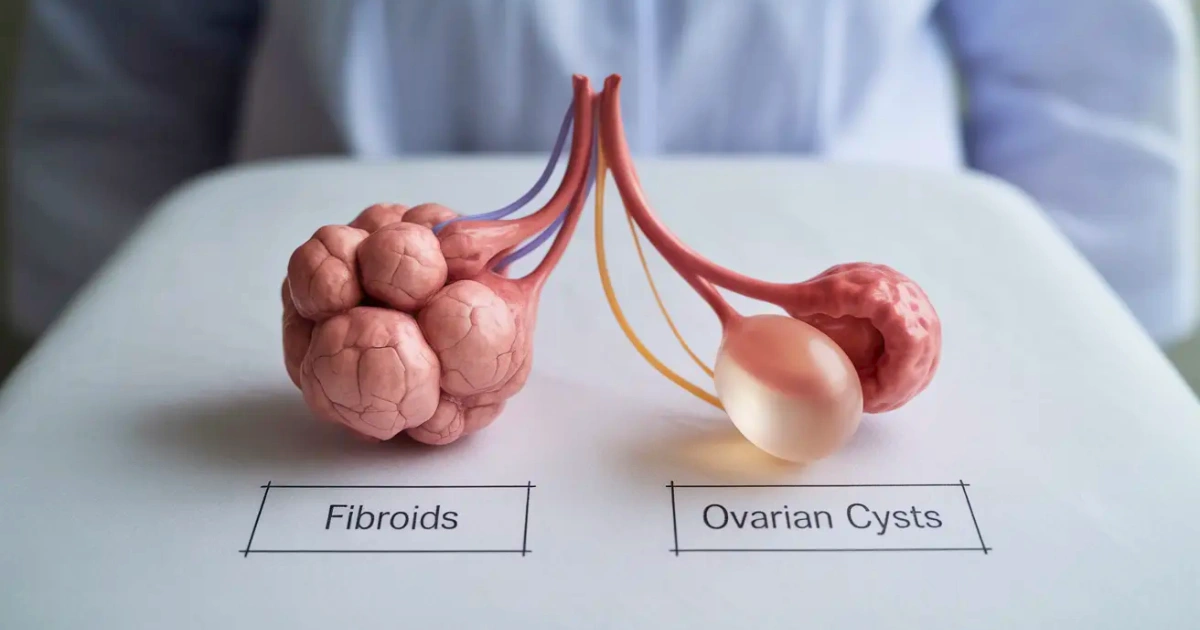

Many women experience pelvic pain, heavy periods, or abdominal bloating at some point in their lives. Two common conditions that can cause these symptoms are uterine fibroids and ovarian cysts. Although they may produce similar complaints, they are very different conditions with different causes, treatments, and potential effects on fertility.
Understanding the differences between fibroids and ovarian cysts can help you seek the right medical care and avoid unnecessary worry.

What Are Uterine Fibroids?
Uterine fibroids are non-cancerous growths that develop in or on the muscular wall of the uterus. They are also known as leiomyomas or myomas. Fibroids can vary in size from tiny nodules to large masses that may enlarge the uterus.
Fibroids are most commonly diagnosed in women between the ages of 30 and 50 and are influenced by hormones such as estrogen and progesterone.
What Are Ovarian Cysts?
Ovarian cysts are fluid-filled sacs that form on or inside the ovaries. Many ovarian cysts develop naturally during the menstrual cycle and disappear on their own without treatment. However, some cysts can grow larger, cause symptoms, or require medical or surgical treatment.
Most ovarian cysts are benign (non-cancerous), although certain types require careful evaluation.
Fibroids vs Ovarian Cysts:
| Feature | Uterine Fibroids | Ovarian Cysts |
| Location | In or on the uterus | On or inside the ovary |
| Composition | Solid muscle tissue | Usually fluid-filled |
| Cause | Growth of uterine muscle tissue | Often related to ovulation or other ovarian conditions |
| Cancer Risk | Rarely cancerous | Most are benign, but some require further evaluation |
| Effect on Periods | Often causes heavy or prolonged bleeding | Usually does not cause heavy bleeding |
| Common Symptoms | Heavy periods, pelvic pressure, pain | Pelvic pain, bloating, fullness, pain during ovulation |
| Treatment | Medication, monitoring, myomectomy, hysterectomy | Observation, medication, or cyst removal depending on type and size |
Symptoms of Uterine Fibroids
Many women with fibroids have no symptoms. When symptoms occur, they may include:
- Heavy or prolonged menstrual bleeding
- Pelvic pain or pressure
- Frequent urination
- Constipation
- Pain during intercourse
- Lower back pain
- Enlarged abdomen
- Difficulty becoming pregnant in some cases
The severity of symptoms often depends on the size, number, and location of the fibroids.
Symptoms of Ovarian Cysts
Small ovarian cysts often cause no symptoms. Larger cysts may lead to:
- Pelvic pain on one side
- Bloating or abdominal swelling
- Feeling full quickly after eating
- Pain during intercourse
- Pain before or during periods
- Frequent urination if the cyst presses on the bladder
- Sudden, severe pain if a cyst ruptures or twists (ovarian torsion)
Severe pain accompanied by nausea, vomiting, fever, or dizziness requires immediate medical attention.
Can Fibroids and Ovarian Cysts Affect Fertility?
Fibroids
Certain fibroids—especially those that distort the uterine cavity—may interfere with implantation, increase the risk of miscarriage, or contribute to infertility. Many women with fibroids, however, conceive and have healthy pregnancies.
Ovarian Cysts
Most simple ovarian cysts do not affect fertility. However, conditions such as endometriomas (associated with endometriosis) or PCOS may reduce fertility and require specialized treatment.
For more information and appointments, contact Dr.Deepak Chawla
Phone : 9023703001
Website : www.drdeepakchawla.com